
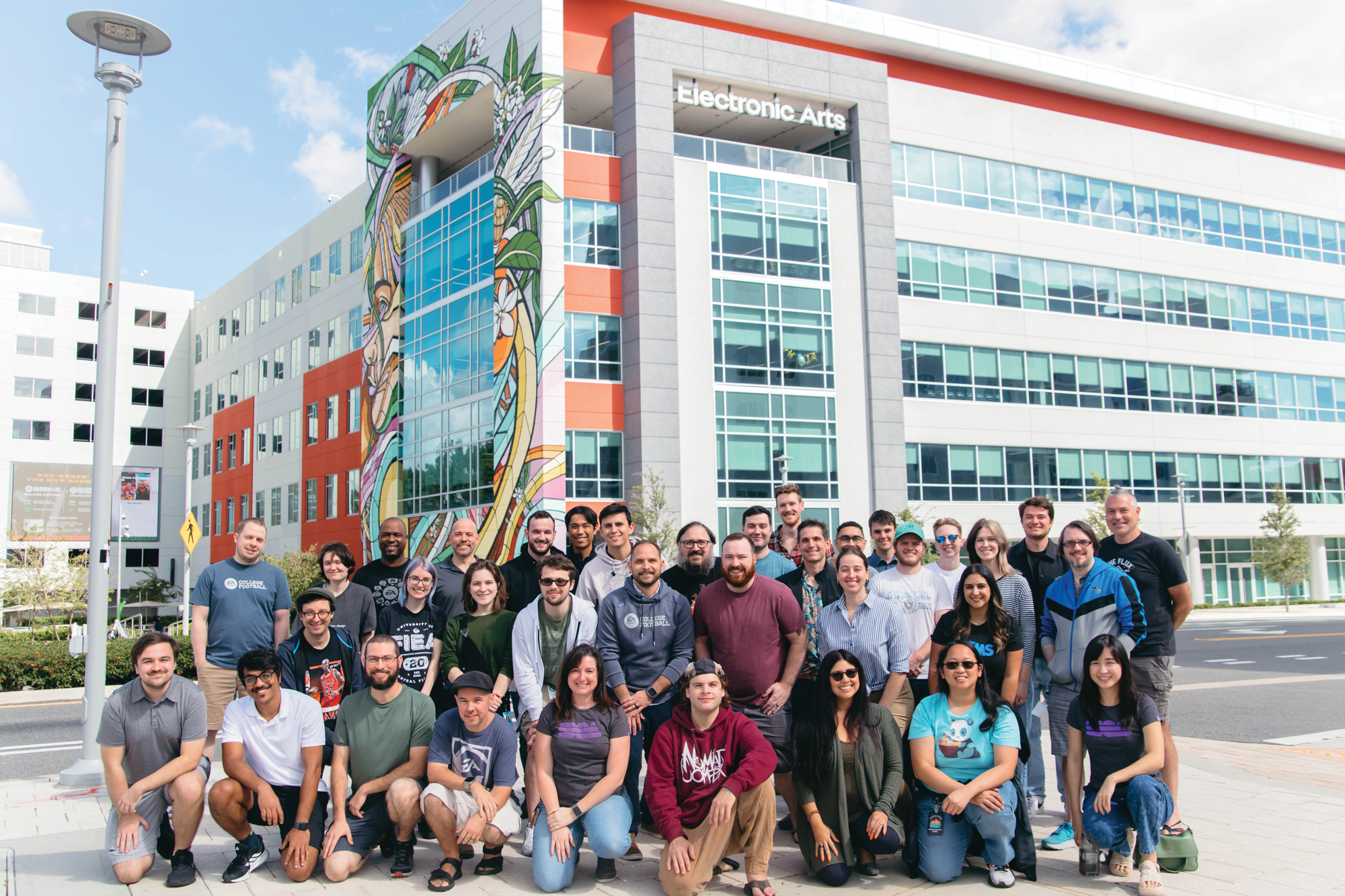
Photo Credit: Berona Muro
In the booming gaming industry, a graduate degree can help increase your salary and prospects and help you reach your career goals. Whether you want to pursue Production, Art or Programming, an advanced degree offers an opportunity for intensive, hands-on learning to deepen your expertise in the field, expand your network connections with faculty and alumni, and make yourself a very competitive candidate for jobs in the industry.
Here are five key factors that you can use to assess whether a graduate program in the entertainment and gaming industry is the right fit for you.
When it comes to the field of gaming and interactive entertainment, funding is critical to not only create, but sustain, a program. For graduate students seeking to generate strong network connections and find high-paying jobs, it is useful to research the founding of the program, as well as any ongoing funders of the program. Understanding program founders, partners, and funders can shed light on the overall resources available, their ability to offer cutting edge technology, as well as the potential pipeline for jobs upon graduation.
For example, is the program receiving any funding from local government or economic development commissions? Has there been sustained growth in the program over time?
To be the best, you want to learn from the best. Be sure to explore the faculty bios for any program you are considering. Do you see potential mentors for your area of interest? Where did they gain their experience in the field? You will also want to explore the structure of the program and curriculum; how much time is devoted to hands-on learning, collaboration, team/project-based learning, to mimic the industry?
In particular, consider what sort of titles your instructors may have worked on, and see whether the student-teacher ratio is low enough to give you meaningful time with those full-time instructors. You can also look to see how recently they worked in the field, so you can be sure that you'll be supported by teaching at the cutting edge of each newly released console and every new game engine. Finally, make sure there are programs that support your specific needs, from project management to technical design, 3D modeling, and programming. If working as part of a team is important to you, make sure you'll get that experience, whether with small groups doing rapid prototypes or large teams on lengthy capstone projects. You can even check to see if any of these games have been released.

Graduate school is expensive, so be sure to research the tuition and cost of living in the area, as well as grant and scholarship money available through the program or from the community/industry. Find out when paid internships might come into play in the course of your studies, as these internships, as well as the total length of the program, will help offset costs.
One potentially critical thing to consider, since time is money, is whether the program is accelerated. There may be a big difference in cost to you between a 16-month program and a two-year one; then again, a two-year program might give you more hands-on experience and opportunities before you enter the field.
Location is important for cost-of-living considerations, but it may be just as important if you dream of working for a particular studio or see a strong path to employment for any particular program. Researching which companies typically hire and recruit from your prospective graduate program is not a guarantee, but can help set you on the right path.
Beyond these critical connections, a successful program also offers state-of-the-art facilities. You probably have limited access to sound stages, motion-capture studios, high-powered computers, and VR labs at home, so if these are areas that you want to gain experience in, make sure you're getting that opportunity.
Everyone in the game industry will tell you it is still a small network. One big benefit to graduating from an MS gaming program is gaining access to the elite faculty and alumni network for that program. Check out the school calendar to get a sense of the quality of guest lecturers and events to enhance your overall experience outside the classroom. These events offer additional avenues to create new network connections, connect with companies, or simply learn the latest trends and technology in the field.
The proof is also in the digital pudding: find out what the current placement rate is for alumni, and in what sort of roles, and make sure those connections are the ones you're looking for. This is especially true if you're looking to travel abroad—the wider the alumni network, the easier it will be to get meaningful advice about whether relocation is the right move for you.
If you’re interested in becoming a partner of The Princeton Review and sponsoring educational content, click here for details .

Explore our featured graduate schools & programs to find those that both match your interests and are looking for students like you.

Check out our complete list of 168 law schools, based on surveys of school administrators and over 17,000 students.

Our medical school search allows you to refine your search with filters for location, tuition, concentrations and more.

Explore our featured business schools to find those that are looking for students like you.


 Opt-Out Signal Honored


